
Trip Levels & Difficulty
All of our guided backpacking trips follow the same basic approach: treat backpacking like a walk in the wild, carry only what you need, and give yourself time to actually notice where you are. Trip Levels and difficulty scores describe how far, how hard, and how complex that walk will be. This page explains these levels and helps you choose the right trip for your fitness, experience, and goals.
Two tools to help you choose

These describe the style and depth of experience.
1-5
These describe how physically demanding a trip is, regardless of level. The higher the number, the harder the trip will feel.
How Trip Levels work
Our levels describe the overall experience of a trip, not just miles and elevation. All trips are organized into three progressive levels that determine how long we’re out there, how deep we go, and what skills we focus on.




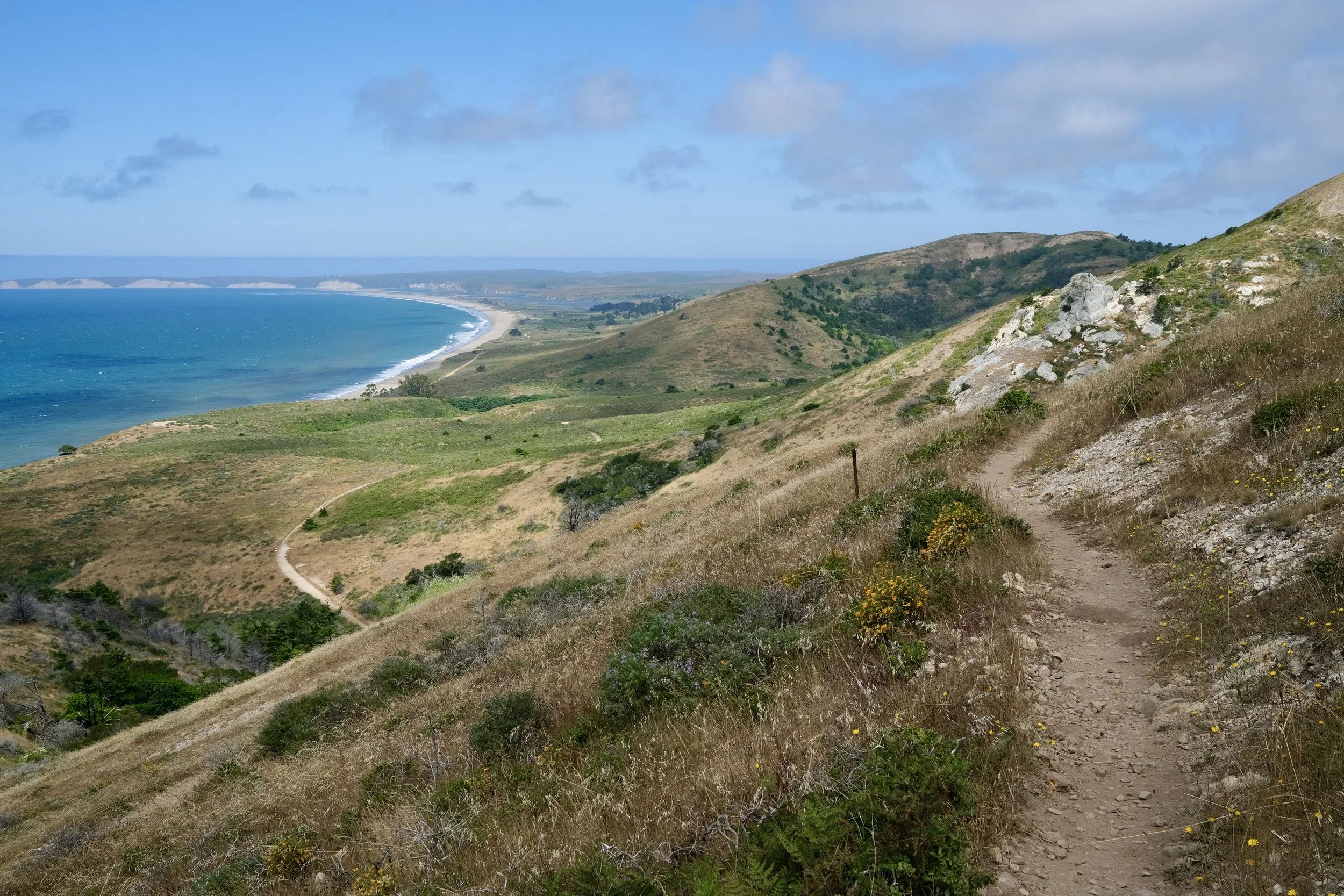
Level 1
Essentials
Level 1 - Essentials
For newer backpackers and strong day hikers who want the core systems dialed.
Level 1 trips are about learning and experiencing the essentials of better backpacking:
Light, simple gear systems
Comfortable camps and food routines
Basic navigation and trail sense
Moving at a steady, sustainable pace
Time to connect with the wild
You’ll still get a nice workout, but daily distances and elevation gain are set so most reasonably active people can handle them with a bit of preparation.
-
You’re newer to backpacking or have only done one or two trips.
You’re comfortable on 5–8 mile day hikes with moderate hills.
You want a trip that focuses on skills, comfort, and confidence instead of maximum mileage.
You’re okay working hard but don’t want to feel on the edge all day.
-
Trip length: usually 3 days / 2 nights.
Daily distance: roughly 5–8 miles.
Elevation gain: up to ~1,500–2,000 ft on the biggest day.
Terrain: mostly good trail with clear tread.
Off-trail: none, or very short, gentle sections.
Altitude: sea level up to around 10,000 ft depending on the route.
Difficulty score: roughly 2 / 5 on our scale.
-
Point Reyes Coastal Essentials
3 days / 2 nights • Coastal trails, beach camp, mellow elevationYosemite High Country Essentials
3 days / 2 nights • Lakes and meadows in Yosemite’s high country with moderate climbs
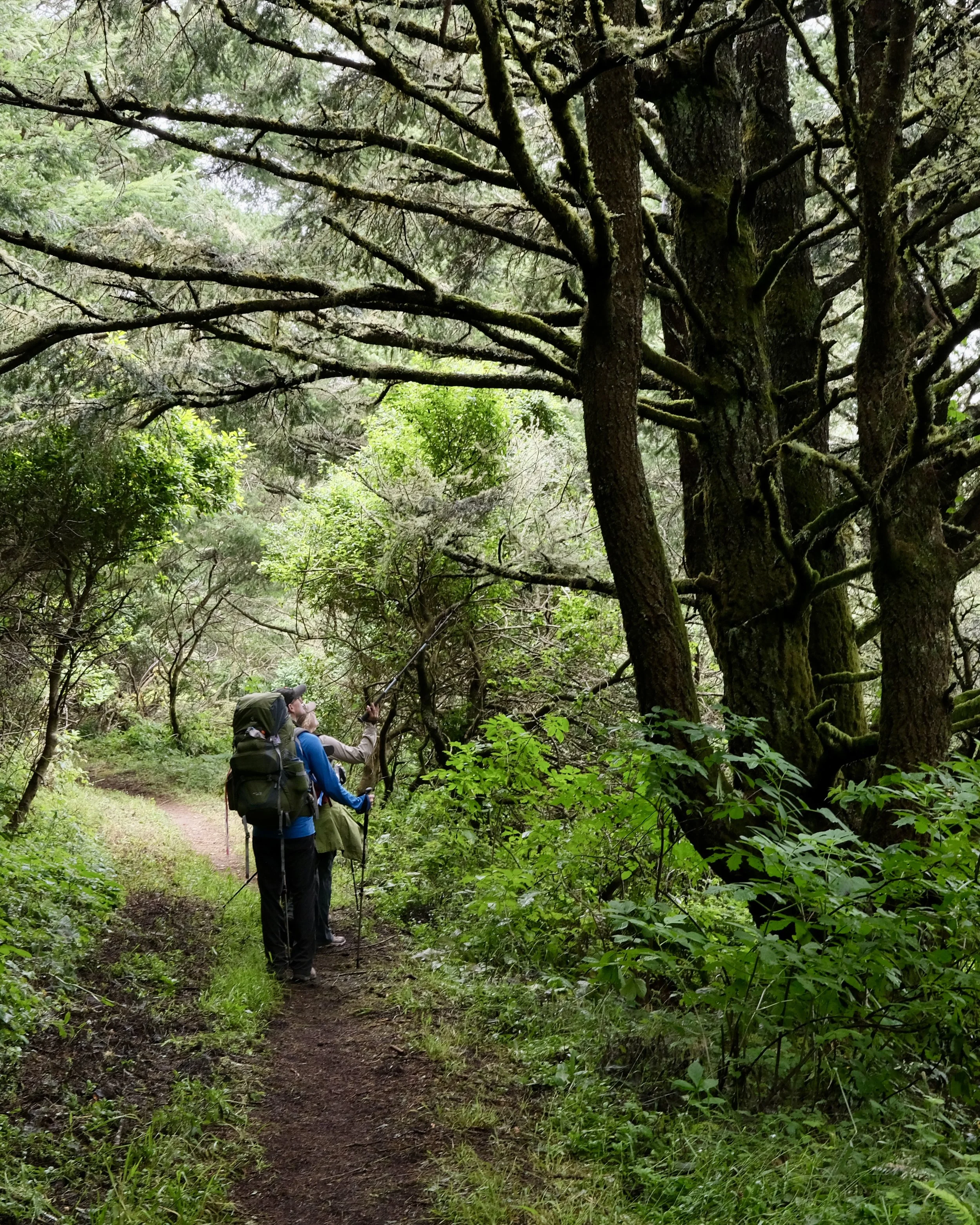
Level 2
Explorations
Level 2 — Explorations
For hikers who have the basics and want to go farther, higher, and wilder.
Level 2 trips build on the essentials and start to feel more like real backcountry journeys:
Longer days (typically 7–10 miles) with more climbing
Some off-trail or rougher terrain
More time away from crowded corridors
Opportunities to be part of route and pace decisions
More practice with navigation, judgment, and managing yourself in the backcountry
You’re signing up for meaningful effort, deeper wilderness, and more commitment than a typical ‘intro’ trip.
-
You’ve backpacked before and know you like it, or you’re a strong, experienced day hiker.
Hiking 8–10 miles with 2,000 ft of gain in a day feels challenging but doable.
You’re curious about off-trail travel and high-country terrain, but want to learn it with support.
You want more time living in wild places, not just touching in and out.
-
Trip length: usually 4–5 days.
Daily distance: roughly 6–10 miles.
Elevation gain: often up to ~2,000 ft in a day.
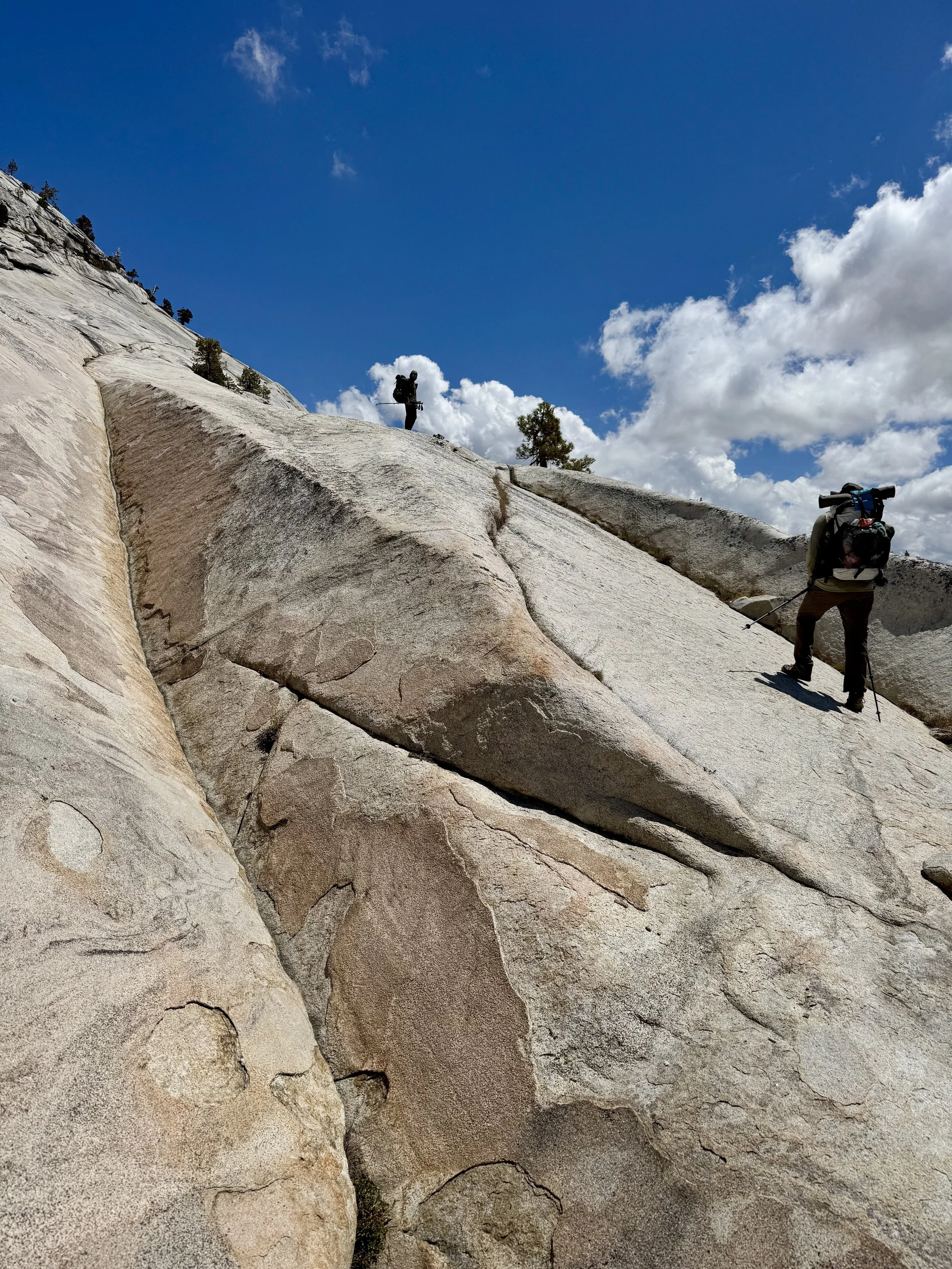
Terrain: mix of trail and off-trail, or trail with more rugged surfaces (sand, cobble, slabs, low-angle rock).
Off-trail: common on many Level 2 itineraries.
Altitude: often 8,000–11,000 ft on Sierra trips.
Difficulty score: roughly 3–4 / 5 on our scale.
-
Yosemite High Country Explorations
4 days / 3 nights • High-country basins and passes, some off-trailSecret Sierra: Emigrant Explorations
5 days / 4 nights • Quieter “Secret Sierra” country north of YosemiteLost Coast Coastal Explorations
4 days / 3 nights • Tide-timed travel on California’s wildest coastline
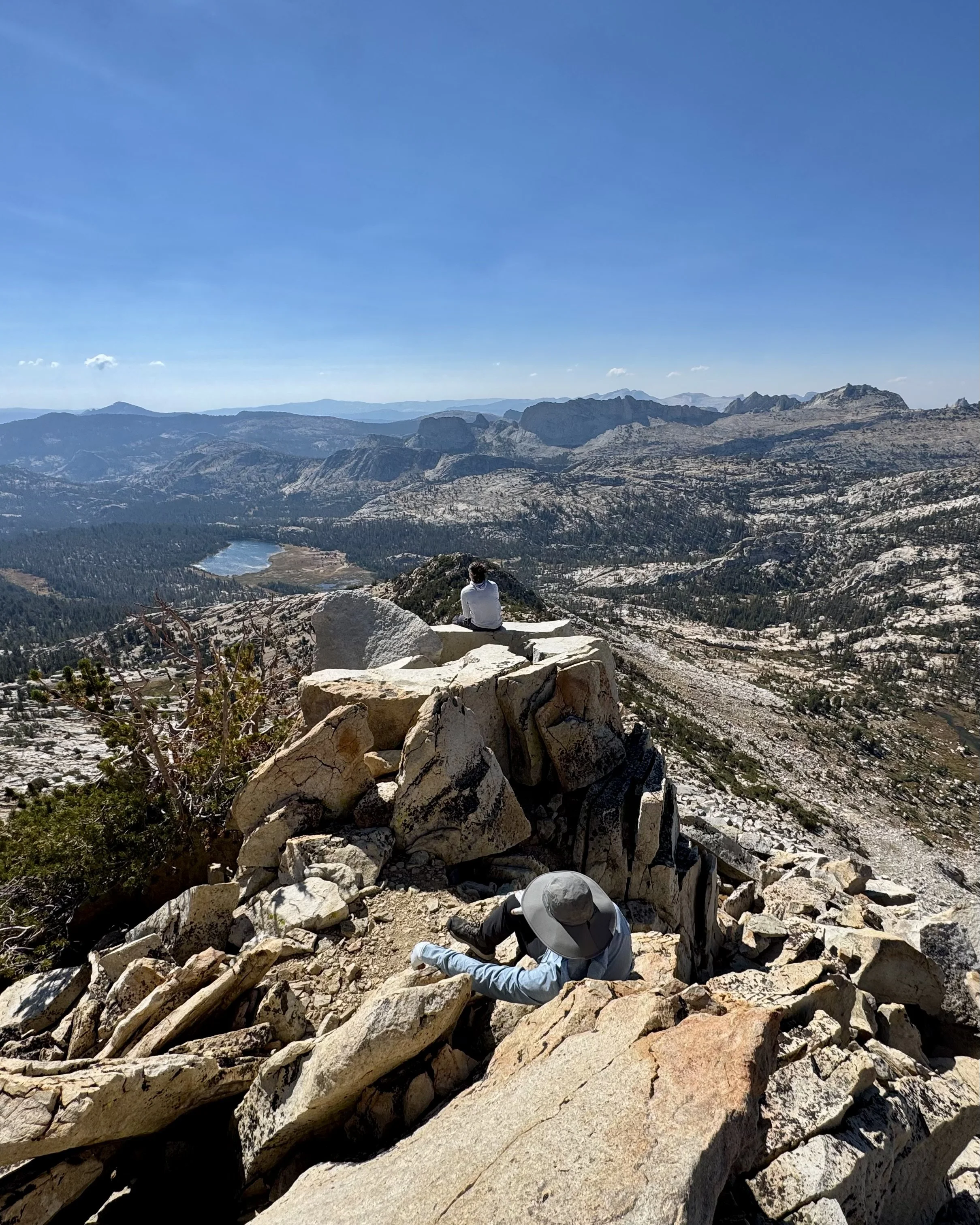
Level 3
Immersions
Level 3 - Immersions
For experienced backpackers who want a committing, high-route-style week.
Level 3 trips are where everything comes together:
Multiple days in a row of real mileage and climbing
Significant off-trail travel
Long stretches far from trailheads and easy exits
Deeper involvement in planning, decisions, and daily strategy
More exposure to weather, terrain, and the reality of living outside for a week
These trips are about living in the high country long enough, with solid support and systems, that the landscape gets under your skin and you come home seeing the range differently.
-
You’ve done multi-day backpacking trips and recovered well.
You’re comfortable on uneven, off-trail terrain.
You’re drawn to the idea of a “high-route style” week in the Sierra.
You understand that once you’re in there, getting out isn’t always quick.
-
Trip length: usually 7 days / 6 nights.
Daily distance: often 7–10 miles, many of them off trail.
Elevation gain: regularly 3,000+ ft in a day.
Terrain: extensive off-trail travel on slabs, talus, steep grass, passes, and occasionally more exposed sections.
Off-trail: the majority of the route.
Altitude: typically 8,000–11,000+ ft.
Difficulty score: roughly 4.5+ / 5 on our scale.
-
Yosemite High Country Immersion
7 days / 6 nights • High-route style, off-trail passes and remote basins in Yosemite’s alpine country
How we think about difficulty
Backpacking is meant to be a physical challenge, and that effort is part of the reward. With some training and a lighter pack, most trips become more approachable. But beyond miles and elevation, factors like weather, remoteness, and decision-making can contribute to how hard a trip feels. Our difficulty ratings try to account for all of these factors.
Distance
How far we hike in a day and across the whole trip; more miles means more time on your feet and more cumulative fatigue.
Elevation
How much we climb and descend, and how high we go; big climbs or long days above 8,000–10,000 feet can make even moderate mileage feel hard.
Terrain
Smooth trail is one thing; loose rock, slabs, sand, brush, and off-trail sections demand more balance, focus, and effort for every step.
Exposure
How much wind, sun, storm risk, airy sections, and persistent bugs you have to manage while still hiking, eating, and sleeping outside.
Commitment
How long we’re out, how far we are from easy exits, and how much uncertainty, decision making, and offline time you carry each day.
How Difficulty Scores work
Each trip is given a simple difficulty score from 1–5, which accounts for all of the factors outlined above. Levels describe the type of experience. The score describes how hard a trip may feel, regardless of level.
-
Short distances, little elevation, smooth trails. Not currently in the lineup, but think “intro overnights.”
-
Short to moderate days, modest climbs, good trails. A fit beginner can handle this with basic prep.
Where this shows up:
Yosemite High Country Essentials (a bit harder than Point Reyes due to elevation and climbing)
-
Full hiking days, noticeable climbs, uneven terrain. You feel worked, not wrecked.
Where this shows up:
-
Longer days, bigger climbs, more sustained effort, or more off-trail. You need a real fitness base and recovery habits.
Where this shows up:
-
Long days, significant elevation, off-trail or complex terrain, real remoteness. For experienced, well-prepared backpackers only.
Where this shows up:
Sections of the Yosemite High Country Immersion
Trip Difficulty at a glance
Point Reyes Coastal Essentials
Level 1 — Essentials
Difficulty: 2 / 5
3 days / 2 nights · ~18-22 miles total
Up to ~1,100 ft gain in a day
Coastal trails and maintained paths
Yosemite High Country Essentials
Level 1 – Essentials
Difficulty: 2+ / 5 (Harder than Point Reyes due to altitude and climbing)
3 days / 2 nights · ~18–22 miles total
Up to ~2,000 ft gain on the biggest day
High-elevation trail travel
Yosemite High Country Explorations
Level 2 – Explorations
Difficulty: 3 / 5
4 days / 3 nights · 25+ miles total
Up to ~2,000 ft gain on the hardest day
Mix of trail and off-trail, w/ light scrambling
Lost Coast Coastal Explorations
Level 2 – Explorations
Difficulty: 3+ / 5
4 days / 3 nights · ~25 miles total
Modest elevation gain, but high effort
Sand, cobble, and tide-dependent terrain
Secret Sierra: Emigrant Explorations
Level 2 – Explorations
Difficulty: 4 / 5
5 days / 4 nights · ~40 miles total
Up to ~2,000 ft gain in a day
Frequent off-trail canyon and slab travel
Yosemite High Country Immersion
Level 3 – Immersions
Difficulty: 5 / 5
7 days / 6 nights · roughly 50-65 miles
Regular days with ~3,000+ ft of climbing
Majority off-trail, multiple passes, some exposure
How to choose the right trip
If you’re on the fence, here are a few ways to think about how you may fit into a trip.
-
Longest recent day hike under ~7 miles with some hills and you felt pretty worked → start with Level 1 – Essentials.
You routinely hike 8–12 miles with decent gain, and have done at least one backpacking trip → you’re probably fine on a Level 2 – Explorations trip.
You already do long, steep days with a pack and you’re comfortable (or ready for) off-trail → you can consider a Level 3 – Immersions trip.
-
If knees, ankles, or back flare on steep or uneven terrain, lean toward a lower difficulty score.
If you’re managing injuries or a chronic condition, say so when you inquire so we can be realistic.
-
Never been above 8,000 ft? A Level 1 or lower-end Level 2 Sierra trip is a better first step than jumping straight into the hardest thing on the menu.