
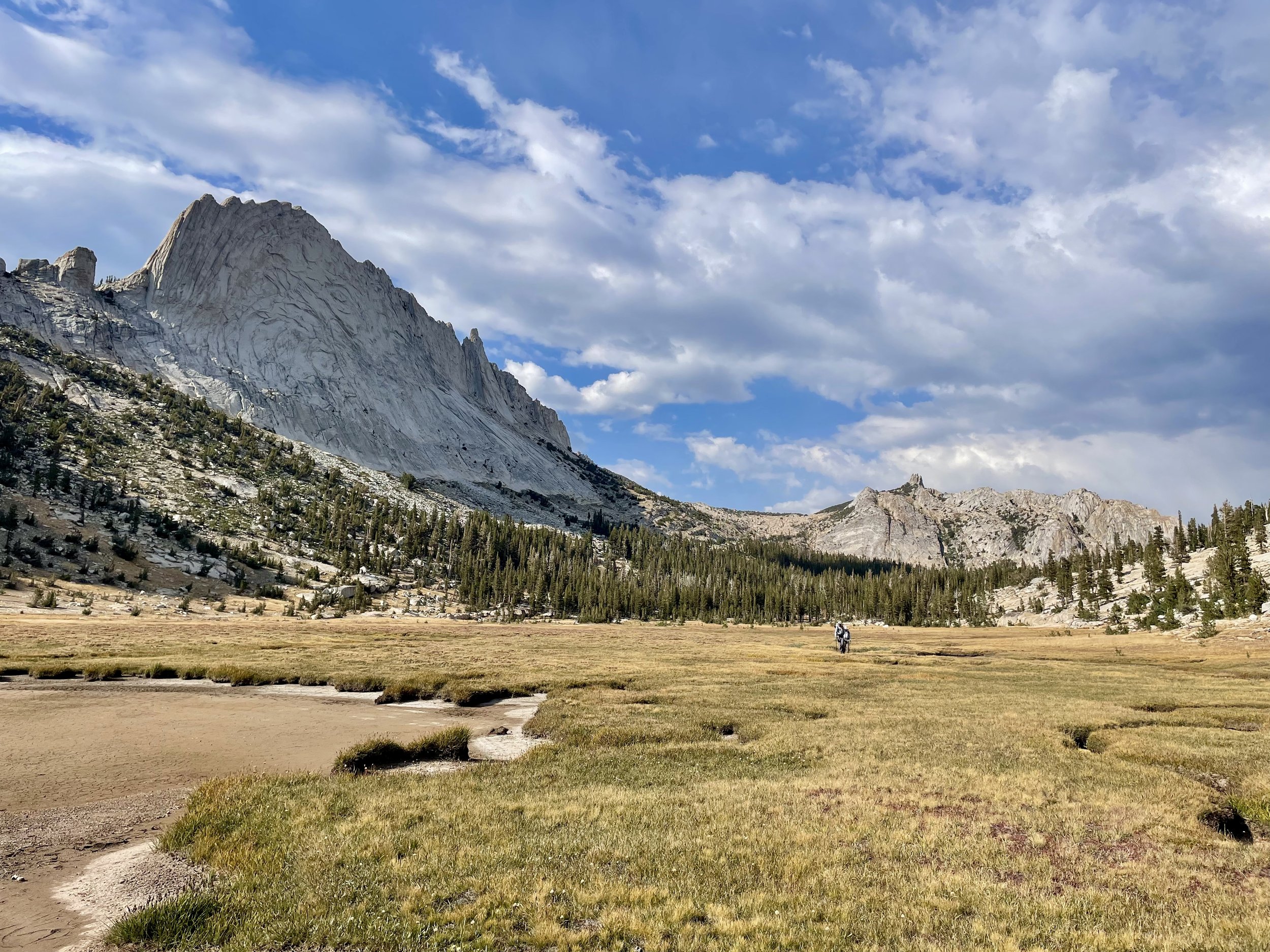
What to expect on a Wilder Walks trip
Wilder Walks runs small-group guided backpacking trips in California’s Yosemite National Park, Emigrant Wilderness, Point Reyes National Seashore, and along the Lost Coast. Our approach is simple: plan a great route, carry only what you need, and live outside for a few days. Behind that simplicity is a lot of careful planning. This page explains how our trips work and what it feels like to join one.
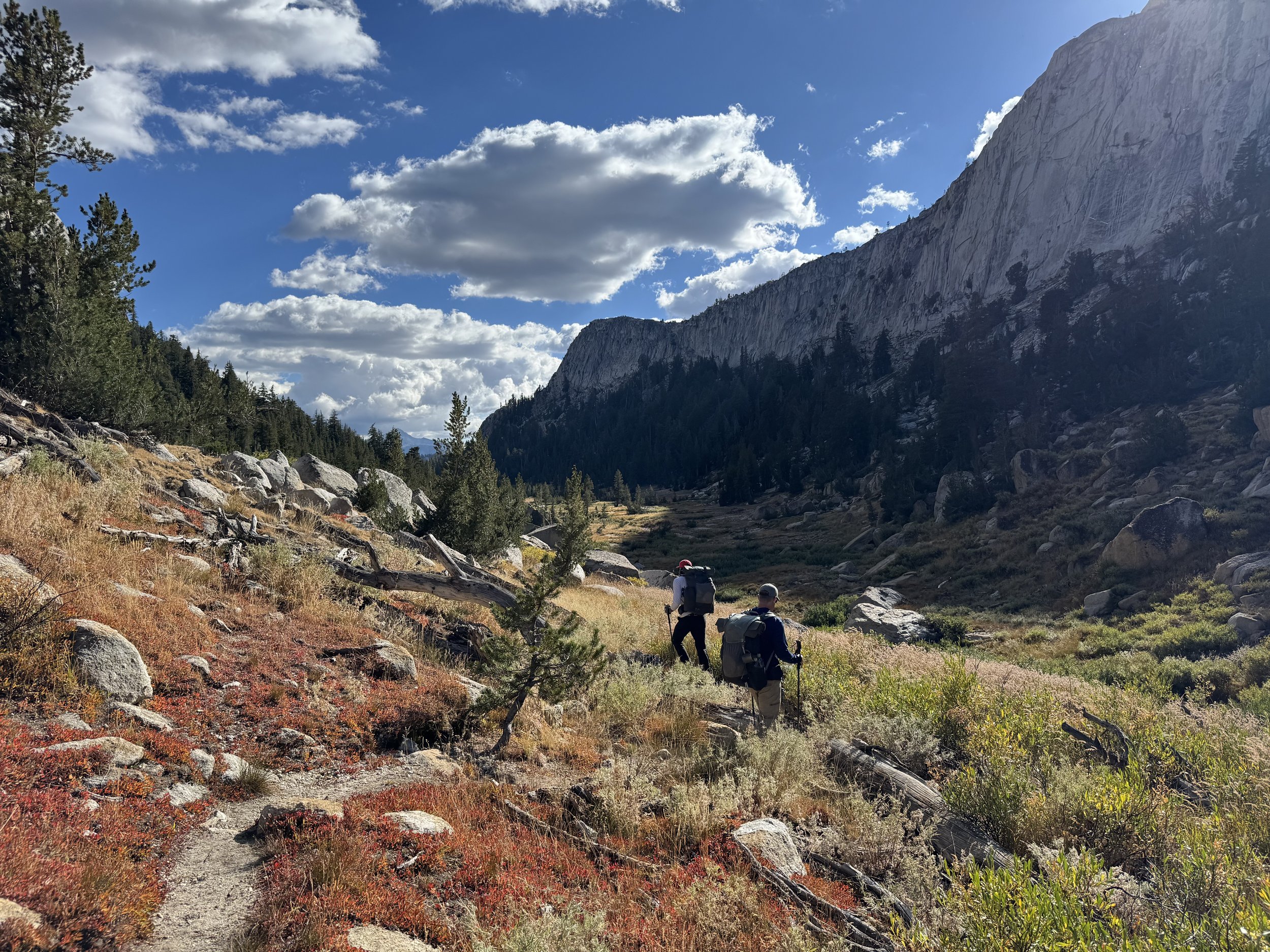
What you’re signing up for
When you sign up for a Wilder Walks trip, you get a thoughtfully planned route, a deeper connection with the places you walk through, and support that keeps the whole experience doable and enjoyable. The goal is for backpacking to feel more like a walk in the wild than an ordeal.
-
Backpacking with a focus on comfort, presence, and solid systems. Learn simple planning and packing systems you can reuse on your own trips.
-
You get a complete ultralight kit that’s been dialed in over hundreds of nights on trail: backpack, shelter, sleep system, and kitchen, plus guidance on what’s worth buying later.
-
Small groups mean plenty of real coaching. Get help with hiking form, navigation, and camp systems so you leave feeling capable and ready to plan your next trip.
-
Low-impact trips that also help get more youth outside. We follow practical Leave No Trace and help fund backpacking experiences for California youth.
What you’ll learn
All of our trips are hands-on, with plenty of chances to learn how to walk more confidently and comfortably through wild places. The details and depth change by route and trip level, but every trip touches three overlapping systems: Self, Place, and Gear. You can lean into the learning as much or as little as you like; some people come mainly to build skills, others just want a memorable trip with solid support. Both are welcome.
Self | Your skills, habits, and mindset
Clarify why you’re out there and what a “good” trip looks like for you.
Match trip choices to your current fitness, experience, and goals.
Practice pacing, hiking form, self-care, and on-trail decisions so you can hike farther, carry less, and stay within your limits day after day.
Place | The landscape you move through
Read routes and the landscape itself, not just a line on a map or a GPS track.
Notice patterns in weather, water, plants, and rock and what they mean for how you move and where you camp.
Start to feel at home in the ecosystems you are walking through, not just passing through them.
Gear | The systems that support you
See how a simple, ultralight kit can keep you safe and comfortable without weighing you down.
Learn how to pack and adjust your backpack and run basic systems for shelter, warmth, cooking, and staying organized.
Get honest, experience-based advice on what to upgrade next and what you can skip.
The gear you’ll use
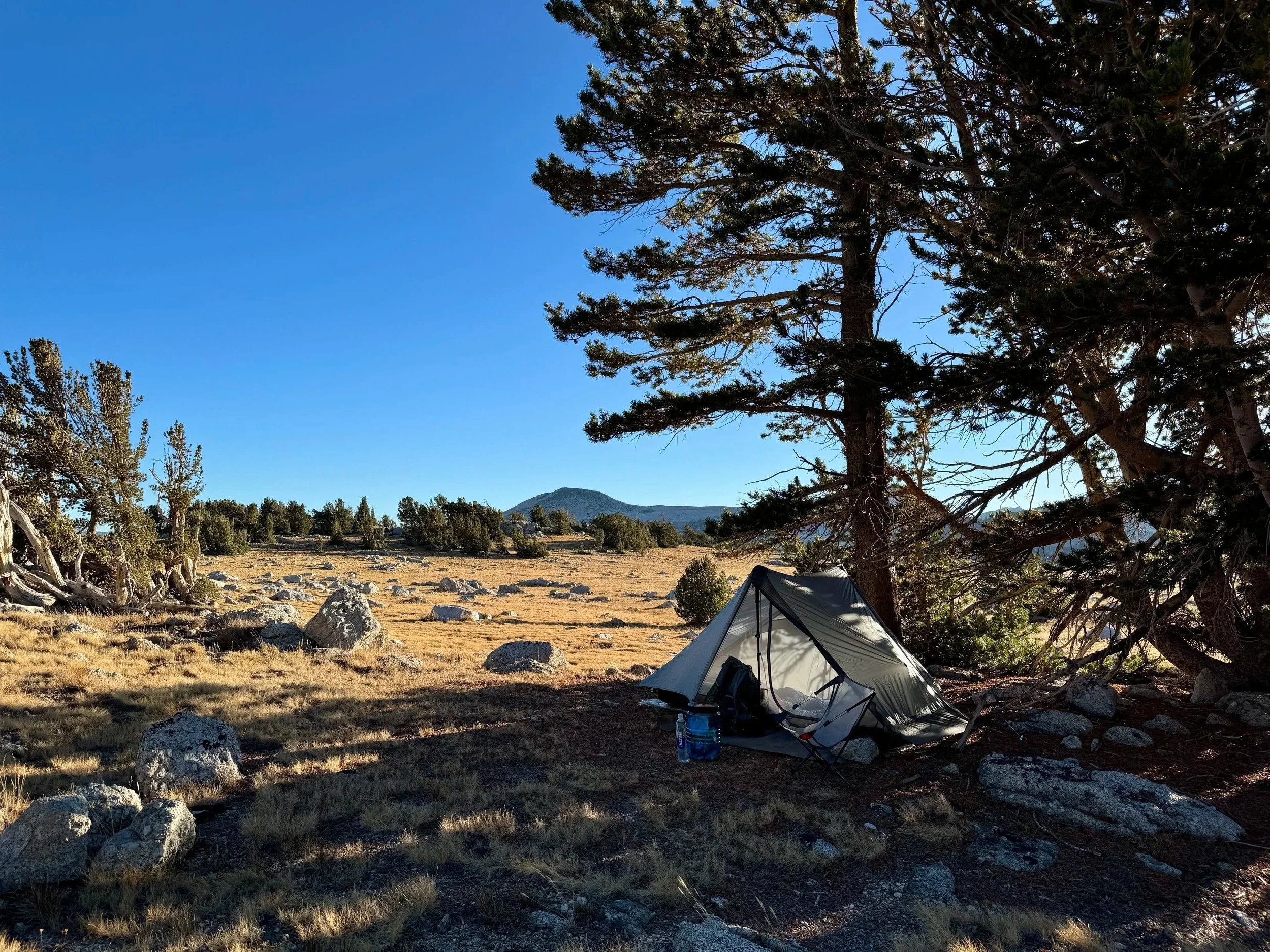
A complete kit of state-of-the-art ultralight gear is included on every trip. You bring clothing and personal items. I bring the pack, shelter, sleep system, and kitchen.
-
You’ll get access to a complete kit that’s been trail-tested and refined over hundreds of nights and thousands of miles of experience, including:
Ultralight backpack
Ultralight shelter
Sleeping bag or quilt + pad
Eating and drinking utensils
-
Before the trip we walk through your packing list together so you know exactly what to bring:
Clothing and footwear
Personal items (toiletries, meds, etc.)
Any small extras you really care about
-
You’ll leave with a gear list you can adapt to any future backpacking trip, with clear guidance you’ve put to the test in the field:
How to pack and adjust your pack so it feels good
How your shelter, sleep, clothing, and kitchen systems work together
How to prioritize what truly earns a place in your pack on future trips
How a trip works
Step 1
Choosing the right trip
Each season, we run a limited number of group trips and keep some dates open for private or custom departures. All trips are designed around three levels that determine how long we’re out there, how deep we go, and what skills we focus on.
Learn more about our Trip Levels & Difficulty >
Level 1 Essentials

Level 2 Explorations

Level 3 Immersions

Step 2
Getting ready
Once you reserve a spot on a group trip or confirm a private itinerary, we’ll make sure you’re properly prepped with helpful resources and video calls to cover the essentials. Here’s how it works:
-
After booking, you’ll get:
A booking confirmation and receipt by email.
A short intake form to share your experience, fitness, injuries, and any medical concerns.
A waiver and policies acknowledgement.
-
Within a few days you will receive a welcome packet that includes:
A detailed packing list with notes on what you can borrow.
A plain language description of the route and difficulty.
How to train for the trip in the time you have.
Travel and lodging suggestions for before and after the trip.
Any special notes, such as tide timing for Lost Coast or altitude considerations for Yosemite and Emigrant.
-
Every group trip includes at least one pre-trip call. Many include two. Private trips and Level 3 trips usually include more. On these calls we will:
Walk through the gear list and help you decide what to bring.
Talk about fitness, training, and how the days will feel.
Go over logistics for meeting up, shuttles, and timing.
Answer questions and talk through any concerns you have.
The goal is to arrive at the trailhead feeling prepared, calm, and ready to go, with focused information that actually helps you.
Step 3
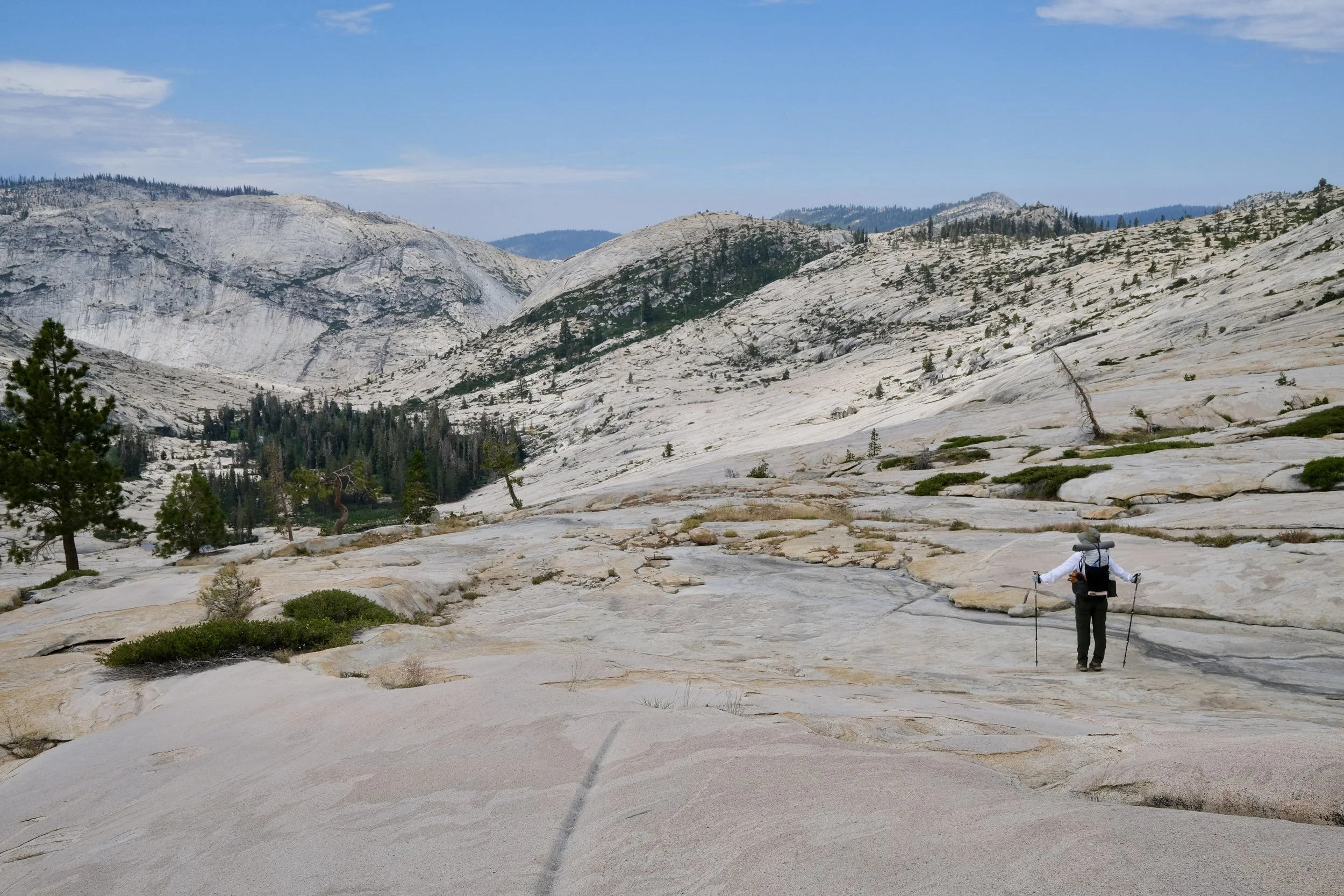
Walking into the wild
A typical day on a Wilder Walks trip
No two trips are exactly the same, but the rhythm of a day is often similar. All trips are structured so we move with the natural world and have time for learning, rest, and simple enjoyment.
-
Wake up around sunrise.
Hot drinks and breakfast.
Pack up camp and leave no trace.
Short check-in about the day’s route, conditions, and options.
-
Hike in blocks of about 45 to 75 minutes with short breaks in between.
We keep a steady, conversational pace that lets you cover real miles and still feel good when you roll into camp.
Notice nature’s nuances at walking speed: plants, geology, weather, wildlife.
Learn along the way, not just in camp, with short lessons on navigation, ecology, and hiking form.
On Level 1 trips this is usually on trail through forest, meadows, and established routes. Level 2 and Level 3 trips may include off trail sections on granite slabs, talus, sand, or canyons.
-
Simple lunch at a good spot, often near water or a viewpoint.
Time to rest feet, refill water, and talk about what we are seeing and doing.
-
More hiking, often a little shorter than the morning on Level 1 trips.
Longer days and more complex terrain on Level 2 and Level 3 itineraries.
Arrive in camp with time for swimming, wandering, or just relaxing.
-
Set up camp together and dial in efficient systems.
Make dinner and hot drinks.
Share stories, talk about natural history, and look at the map to review the day and preview tomorrow.
Head to bed early enough that people get actual rest.
Is a Wilder Walks trip right for you?
-
You like the idea of understanding what you’re doing out there, even if your main goal is simply to have an amazing trip.
You like the idea of walking with a lighter pack and a lighter footprint.
You care as much about how a trip feels as you do about how it looks in photos.
You are willing to carry your own gear, help with camp, and be part of group decisions.
-
You want luxury glamping, porters, or a purely catered experience.
You prefer large groups or more of a party atmosphere.
You’re looking for a peak bagging mission or a purely physical challenge.